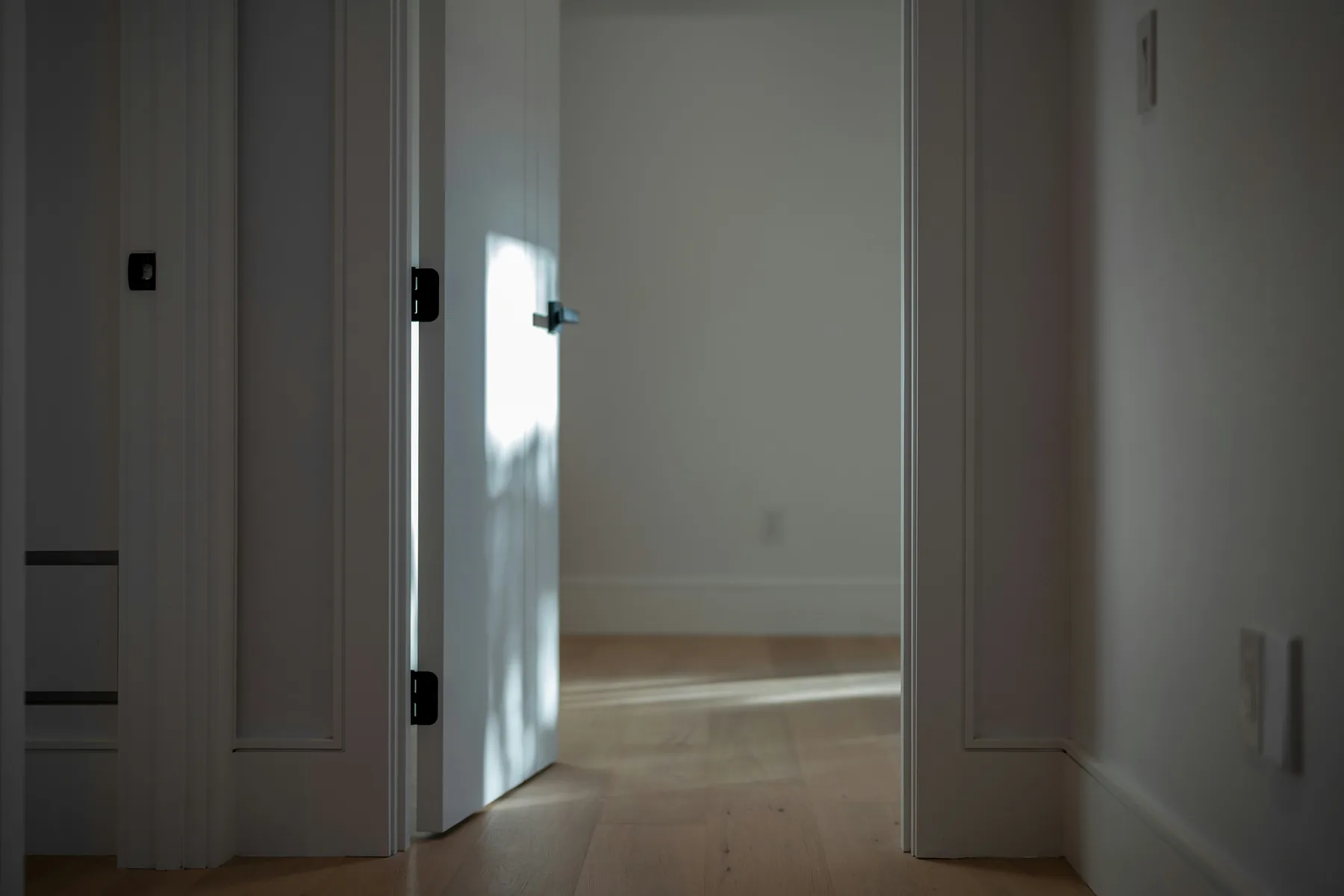
Why do doors and windows start sticking in Fort Worth houses?
If a door in your house stopped latching this year and nothing about the door changed, the ground is the usual reason.
Dallas and Tarrant counties sit on Blackland Prairie soil, and it's frequently more than half clay. It behaves like a sponge, and the volume of soil under a foundation can change 30% to 75% with moisture.
So the ground changes size and the house has to go somewhere. People here call it the Texas Shift, and measured heave across the Metroplex has run past four inches inside a few years.
What the clay does
- Heaving. A wet spring pushes the slab up.
- Settlement. The summer drought shrinks the clay away and leaves voids.
- Differential movement. One part of the house moves faster than another. This is the worst of the three, and it's the main cause of sticking doors, jammed windows and cracked brick.
A fourth pattern is center lift, or doming. In a long dry spell the middle of a slab stays damp longer than the edges do, since the edges are the exposed part. So the slab ends up higher in the middle than it is at the edges.
When the clay moves
The clay moves most in two stretches of the year. A wet spring saturates it and it heaves, so drywall splits and windows jam suddenly. Then triple-digit July and August heat dries it out, it shrinks, and the house settles again. Two seasons, opposite directions, same house.
Where it shows up inside
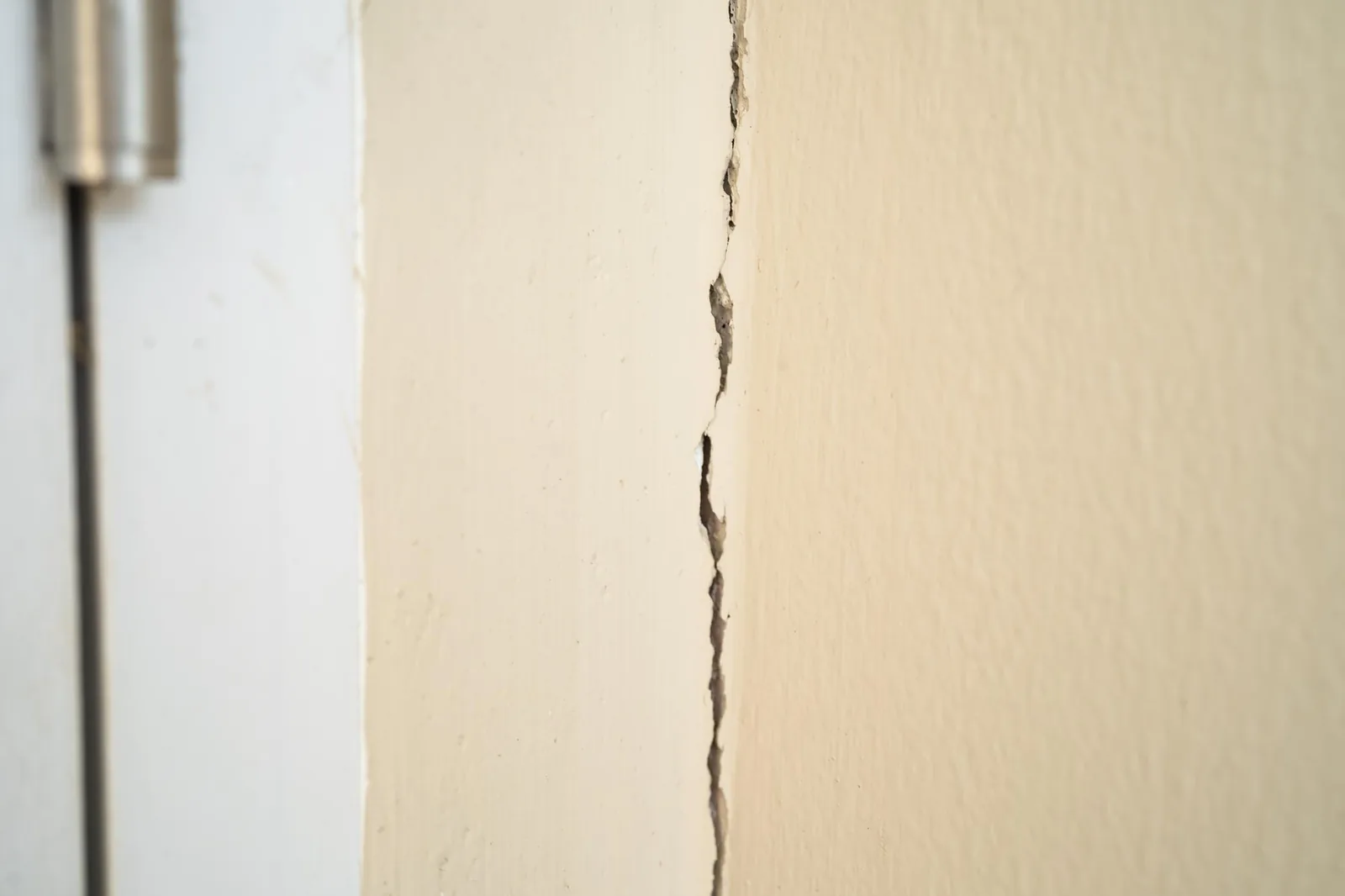
Drywall cracks in a handful of predictable places, and each one has its own reason.
- Corners of doors and windows. Diagonal cracks running away from the corner. Those openings are the weak points in the board.
- Where a wall meets the ceiling, and where two walls meet in an interior corner. The sheets pull apart at the joint.
- Nail pops. Shear pressure behind the board pushes the fastener back out, and you get small circular bumps and cracks in the surface.
All three matter if somebody offers to fill and repaint. Fill a crack that's still moving and it reopens quickly, tearing the new paint.
Two terms people around here use
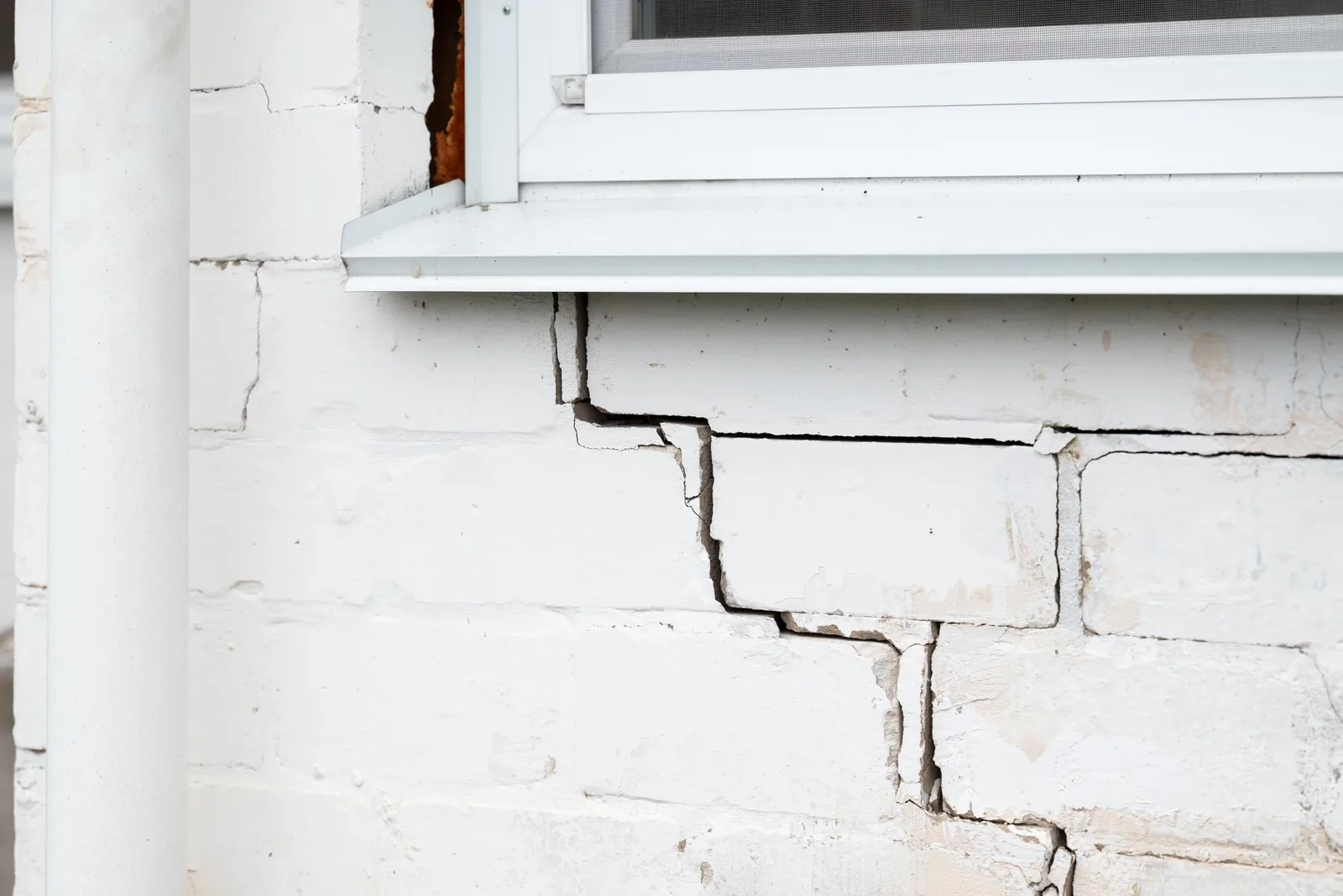
A stair-step crack is the diagonal mortar cracking that runs up a brick wall in a staircase pattern. It's one of the first things people look for when a foundation is moving.
Watering the slab means running soaker hoses around the perimeter, and you'll also hear it called foundation watering. Advice on it splits, so it's worth knowing who says what.
Irrigation and foundation repair companies recommend it, usually 15 to 30 minutes a day within three to five feet of the slab through the dry months, the aim being steady moisture rather than a lot of it. Structural engineers are more cautious. The Foundation Performance Association and the Texas Section of the American Society of Civil Engineers both make the same point: water added at the perimeter doesn't soak in evenly, so it can lift one stretch of slab and leave the next one where it was. They rate that kind of lifting as harder to correct than the settling it's meant to prevent.
Both sides agree on drainage, though. Ground that slopes away from the house, and gutters that carry water away from it, do the same job from the other direction.
The same movement shows up in your pipes, your AC, your electric service and your roof
- Your pipes. The lines under the slab get sheared where they join. It runs the other way too: a small leak soaks the clay around it, the clay swells, and the swelling lifts the slab from underneath. So a plumbing leak can present as a foundation problem, and lifting a foundation can snap an existing line.
- Your air conditioning. Most ductwork here runs through the attic. The same movement pulls on the ductwork, the joints come apart at the seams, and cooled air goes into the attic instead of the room. The indoor unit can end up sitting off level too. The pan under it drains by gravity, so once it's tilted it stops draining and water backs up.
- Your electric service. The buried line running to your meter gets pulled downward by the same soil. It's a known enough problem here that Oncor requires a sleeve fitting on that conduit, so the conduit can slide instead of shearing off the meter box.
- Your roof framing. Movement travels up through the structure and can warp trusses and rafters.
So when a door stops latching, it's worth a look around rather than a shrug.
Not because everything is failing, but because one cause can be showing up in several places at once, and you'd only be treating one of them.
What makes it worse, and what you can go and look at
You do have some say over how evenly the clay stays wet. Three of these you can walk out and look at this afternoon. The leak is the one you can't.
- Grading. Ground that slopes back toward the house instead of away from it.
- Gutters and downspouts. A broken one soaks one corner of the perimeter and leaves the rest dry, which is the uneven moisture the whole problem runs on.
- A leak you haven't found. See above. A slow one under the slab wets one patch of clay the same way a broken downspout does.
- Mature trees close to the house. Big roots pull moisture out of the soil right where they sit. There are root barriers for it.
One last thing, if you're further along than that. After a foundation has been lifted, give the framing several weeks to settle before anybody repairs the drywall and repaints. Do the cosmetic work the same week the lifting happens and you can end up doing it twice.
Do you need an engineer, or is a foundation company's free inspection enough?
It depends on what you're deciding. An independent structural engineer charges a fee and has nothing to sell you afterwards. A foundation repair company's inspection is usually free.
For a door that's started sticking, homeowners on the local forums say water the slab and give it a few weeks before deciding anything. The engineering side would have you check your drainage first, before you put any more water in the ground. By contrast, for the big structural work the engineer isn't optional: taking out a load-bearing wall or adding a story needs a stamped report before a city will permit it.
Working with Awesome Renovations
A lot of remodeling companies only want the big whole-house jobs and won't take on a single room. I'm Jorge Ventura, and I take both. Awesome Renovations is four people, and I'm one of them, on site. We also have a shop on East Lancaster Avenue you can drive to. Our finished rooms are here if you want to see how they come out.
One of our customers:
"Awesome is not just the name, they honor it. My bathroom looks incredible thanks to Jorge and his crew." (Eder Alvatez, 08-06-2026)
That one is from our 32 written reviews.
Tell me which room you're remodeling. I'll come and look at it, and I'll tell you what I'd do.
Get Started
Photo credits
Photo by Franco Debartolo on Unsplash.
