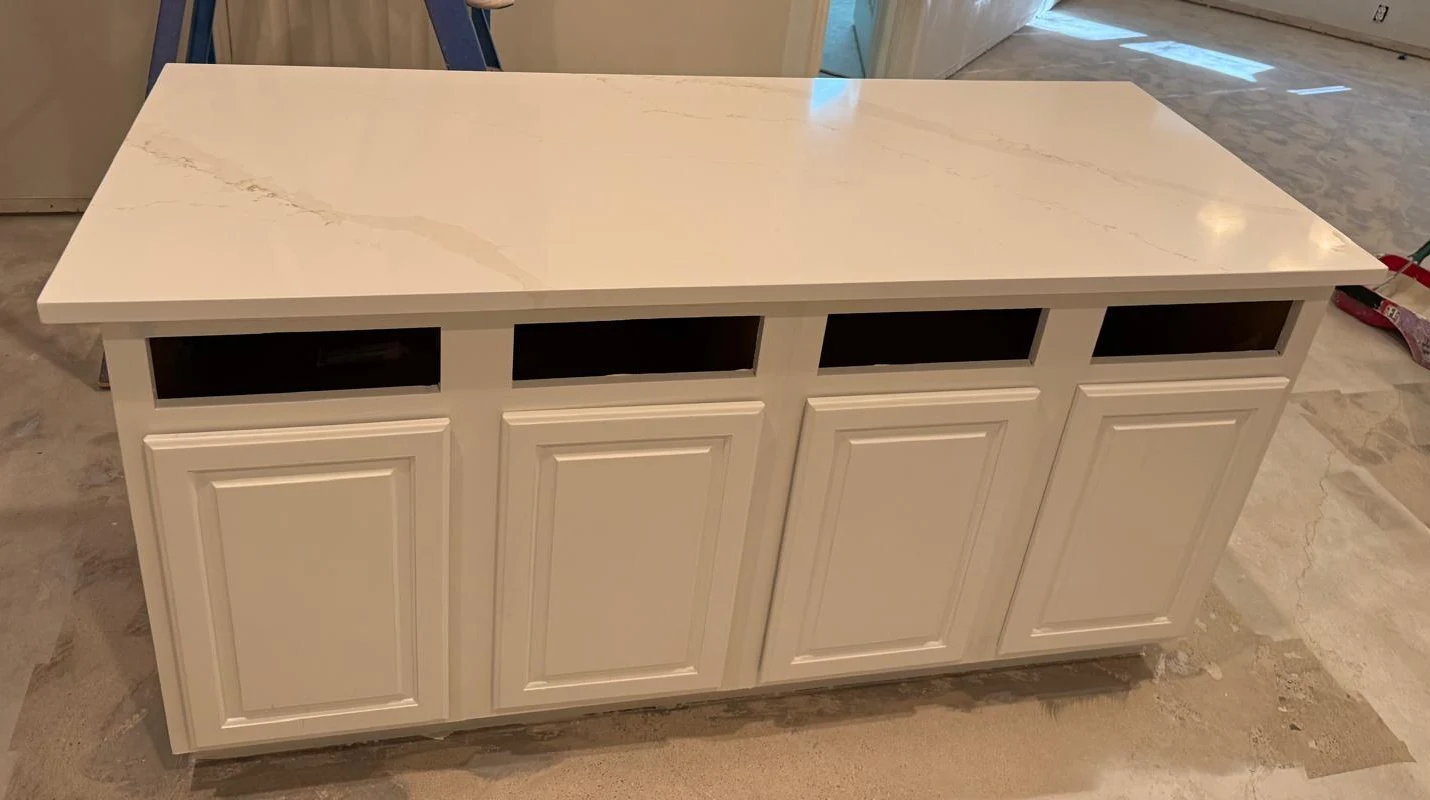
Painted cabinets have 3 different dates: dry, usable and fully hardened
Cabinet paint can feel dry within an hour and still be weeks away from hard. A painted cabinet has three dates, not one: the day the paint is dry to the touch, the day the doors and the dishes can go back, and the day the finish is hard enough to scrub. On some products those dates are days apart, and on others they're weeks apart. Most people only ever hear the first one.
I'm Jorge Ventura, with Awesome Renovations. I wrote about whether your cabinets are worth painting at all in painting your cabinets instead of replacing your kitchen. This post picks up after the last coat goes on.
The 3 dates on a painted cabinet
1. Dry to the touch
This is the one on the front of the can, and it only tells you about the surface. What happens underneath depends on the paint.
A water-based acrylic dries as the water leaves and the tiny particles of paint squeeze together into one film. An alkyd does that and then keeps going. It's the oil-type enamel a lot of cabinet paints are built on now, including some that clean up with water, and oxygen from the air reacts with it and links it together, faster at the surface than down near the wood. So you can have a finish that feels dry and smooth over a layer that's still soft.
That's why touching it proves very little about anything below the surface.
2. Ready to use
This is when the doors go back on the boxes and the plates go back on the shelves, and it's usually days, not hours. Benjamin Moore's sheet for ADVANCE, one of the most common cabinet enamels, gives 4 to 6 hours to touch and 16 hours to recoat, then at least 5 to 7 days before shelves go back into service or the finish takes heavy wear.
Rushing this date is where most of the damage happens, and each kind of damage comes from a different load on the paint:
- The door sticks to the frame. Two painted faces pressed together before the paint is ready can bond, and the paint tears when the door opens. Painters call it blocking, and Sherwin-Williams' advice on it starts with not closing doors before the paint has dried enough.
- Plates and hardware leave marks. A stack of dishes on a soft shelf, or a hinge screwed down tight onto fresh paint, can press its shape into the finish. Warm, damp air makes it more likely.
- Edges scuff. The corners and the drawer fronts that get handled all day wear through before the paint is hard enough to take it.
Doors can usually go back on before the shelves get loaded, because hanging a door carefully is a lighter job than closing it a hundred times or stacking plates on it. Ask for the two as separate dates.
3. Fully hardened
This is the date for normal life: cleaning, wiping, the kitchen used hard. ADVANCE can take up to 30 days to reach its full hardness and final sheen.
The product makes a bigger difference to this date than most people expect. Two finishes can both feel dry in half an hour and be ready to recoat in two, and still be two weeks apart on the last date: a two-part catalyzed varnish can be fully cured in about a week, while some water-based acrylics take around three weeks.
So "it's water-based" or "it's oil-based" doesn't tell you the date. The name of the product does.
What stretches the dates
The numbers on the sheets are measured in good conditions, usually around 70 to 77 degrees and 50% humidity. A Fort Worth kitchen in November, with a door open to the garage, isn't that.
- Cold. Most cabinet enamels list 50 degrees as the lowest temperature to paint at. That's the floor for putting it on, and the drying times on the sheet were measured well above it. Some catalyzed finishes need the room above 70 the whole time they cure, or they can crack.
- Humidity. Damp air slows the water leaving the paint. A finish that never gets all its water out can feel dry and still be soft and sensitive to moisture.
- Thick coats. A heavy coat has more water or solvent to lose, and the bottom of it lags behind the top.
- Still air. Moving air carries the moisture off. Air that doesn't move holds it next to the finish.
I haven't seen a paint maker publish a rule like "double it in winter." The sheets just say cool or damp conditions make every stage take longer. In practice that means keeping the room warm and the air moving through the nights too, not just while the painting is going on.
That's a big part of why my crew sprays doors at our shop on East Lancaster Avenue, inside a plastic tent with a fan running, rather than in somebody's hallway. The doors dry with air moving over them, out of your kitchen.
Telling which stage your paint has reached
You can't prove a finish is fully cured by poking it, and trying to is how a good finish gets marked. Leave the fingernail test and the "let's see if the cleaner hurts it" test alone. What does help:
- Know the product and the day of the last coat. Write down the exact paint, the sheen, and the date. That gives you the manufacturer's dates to count from.
- Notice tack, don't go looking for it. If a door feels sticky when you handle it gently, or catches on the frame, wait longer before you load it.
- Use a spare piece. If you want to test, a scrap painted at the same time with the same coats tells you something without risking a door.
Cleaning a newly painted cabinet
Wait for the full cure, about 30 days on a lot of cabinet paints, before routine cleaning. If something spills before then, wipe it up gently with a damp microfiber cloth and a little mild soap, and dry it. Keep bleach, ammonia, alcohol and scrubbing pads off the paint even after it's cured.
"Soap and water cleanup" on a paint can is about washing the brushes. It doesn't mean you can wash the cabinets the next day.
Sticky around the handles months later
A soft or tacky patch around the pulls, a long time after the paint went on, usually isn't the paint still curing. Dunn-Edwards, a paint maker, documents hand oils and cooking grease soaking into cured latex paint around pulls and drawer edges and softening it. Waiting won't harden that back up. Paint that's chipping or peeling around the handles can also mean grease was left on the cabinet before it was painted, and that's a preparation problem, not a timing one.
What to ask for before the painting starts
The same three dates, written down:
- Dry to the touch: when the surface stops feeling wet. The next coat waits longer than that: 16 hours on ADVANCE, against 4 to 6 hours to touch.
- Ready to use: when the doors go back on, and then when the shelves can be loaded.
- Fully hardened: when you can clean the cabinets normally.
And the name of the paint, so you can check those dates against the maker's own sheet.
Working with Awesome Renovations
A lot of remodeling companies only want the big whole-house jobs and won't take on a single room. I'm Jorge Ventura, and I take both. Awesome Renovations is four people, and I'm one of them, on site. The rooms my crew has finished are here.
Ask me which paint I'd put on your cabinets. I'll tell you which one and why, and what the three dates are for that paint.
Get Started
For kitchens, cabinets and remodeling in Fort Worth, visit ttscontractors.com/pros/awesome-renovations/
