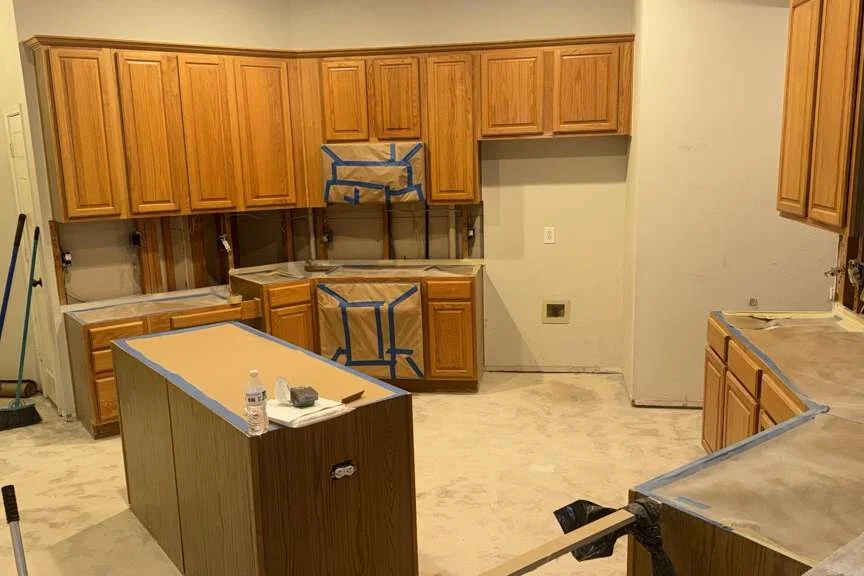
Painting your cabinets instead of replacing your kitchen
If the cabinet boxes are sound and what bothers you is how the kitchen looks, painting them is a real alternative to tearing them out. Whether the paint lasts years or starts peeling in a few months comes down to three things, and the brand on the can is the least of them: the condition of the boxes, the preparation, and how long the finish gets to harden before anyone uses it.
I'm Jorge Ventura, with Awesome Renovations. One whole-house job I ran in the Metroplex ended with the cabinets painted. It started as new flooring through a two-story house of about 2,700 square feet. By the end, every baseboard had been replaced, some walls repainted, and the kitchen cabinets painted rather than pulled out. The whole job took three weeks, start to finish.
First, are the boxes worth painting?
Paint changes how a cabinet looks. It doesn't make a weak box strong, so this question comes before any question about color.
The cabinet industry's own standard doesn't care much what a box is made of. It cares whether it's rigid, whether the joints hold, and whether the doors and drawers work without binding or flopping. Those are the things to check in your own kitchen:
- Open and close every door and drawer. Sagging, binding, a hinge that won't stay tight in its screw holes. Worn hinges or a broken drawer box don't condemn a kitchen, because those parts can be replaced on their own. A box that's racked out of square is failing, and paint won't fix it.
- Look under the sink with a flashlight. Particleboard that has swollen or gone crumbly, plywood whose layers are separating at the edges, a shelf that has sagged. If there's an active leak, that gets fixed before anything cosmetic happens.
- Check whether your doors are thermofoil. That's a plastic film bonded over fiberboard, common on smooth white doors from the last few decades. If the film is peeling or bubbling, it has to be repaired or replaced before painting. Benjamin Moore's ADVANCE sheet names a specific primer for thermofoil, so don't assume a paint that goes straight over varnish without primer, like Cabinet Coat, goes straight over this too.
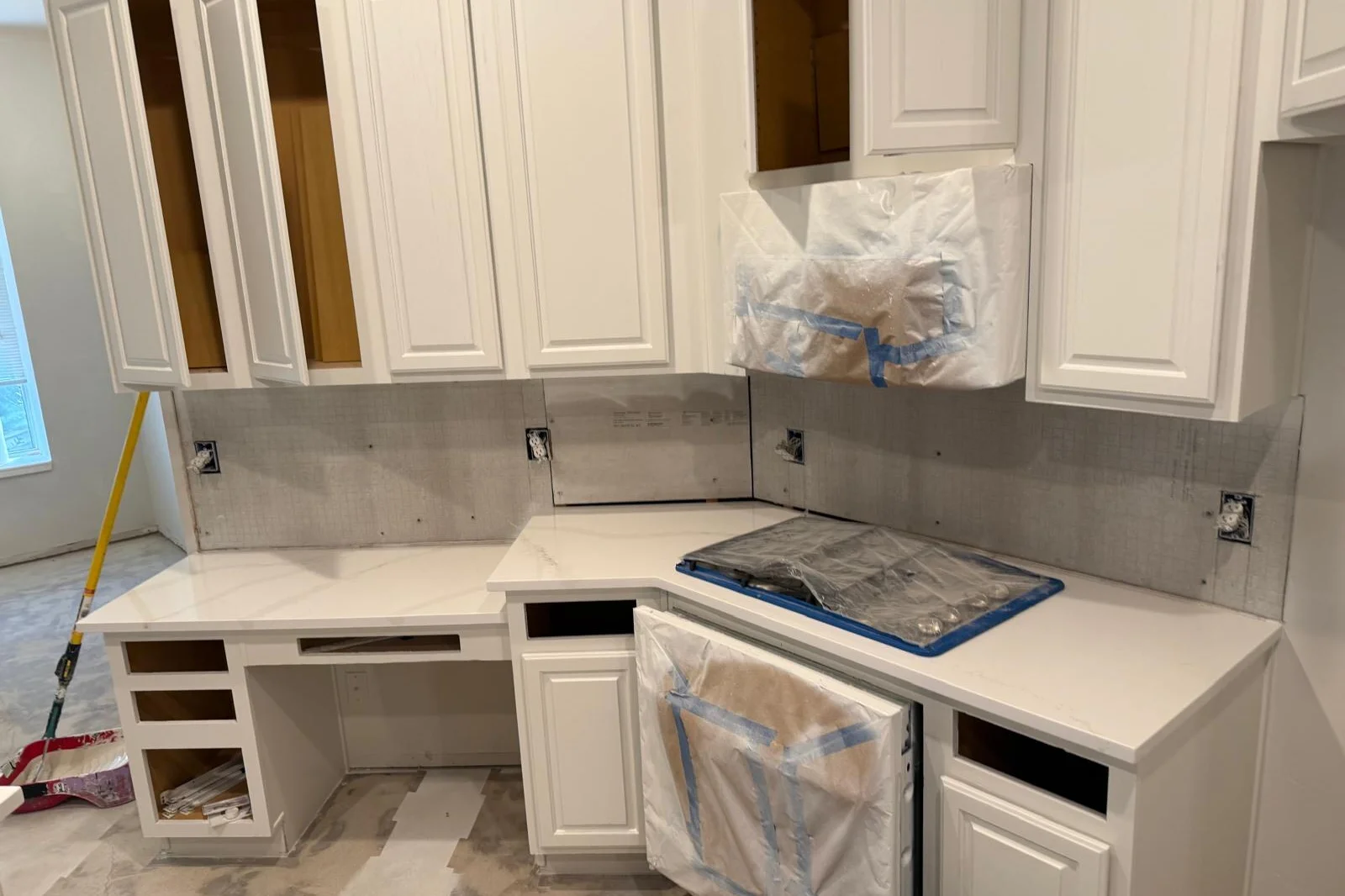
What decides whether the paint holds
Painted cabinets often fail at the bond, where the new paint meets whatever was underneath it. The paint manufacturers' own data sheets are specific about how to get that bond, and they're worth knowing even if you never pick up a brush.
1. Clean before you sand
Kitchen cabinets carry years of cooking grease, and many carry wax or silicone from furniture polish. Sanding a greasy surface just spreads the grease into the scratches. Cabinet Coat's sheet, from INSL-X, a Benjamin Moore brand, says plainly to clean first, then sand. General Finishes goes further and says silicone from dusting sprays is almost impossible to remove, which is worth knowing before you choose a cleaner.
2. Dull the old finish, and take off anything loose
A shiny factory finish needs roughing up so the new coat has something to grip. Anything already peeling has to come off, because new paint over a failing layer fails along with it.
3. Use the primer the paint maker names, not the one somebody swears by
Two pieces of advice get passed around: always prime with oil, or never prime at all. Neither works as a rule. Benjamin Moore's ADVANCE schedule calls for sanding and a named primer on cabinets, while Cabinet Coat says no primer is needed over sound polyurethane or varnish. Both are correct, for their own product. So the useful question to ask whoever is doing the work isn't "do you prime?" It's "which paint system, and are you following that maker's sheet?"
4. Block the stain with its own primer
Oak and other tannin-rich woods, and old stain, can bleed brown or yellow through a white finish. A bonding primer helps the paint stick; it doesn't necessarily stop bleed-through. That takes a stain-blocking primer, and even General Finishes, which sells one, warns that it won't stop every stain.
5. Test the paint and primer on your actual cabinets first
The painting trade's own preparation standard calls for tape tests on the existing finish, at least three where it looks like different finishes are present. A small test on the back of a door, left to cure, tells you more than a product claim can.
6. Brush or spray, either can be right
ADVANCE, Cabinet Coat and Sherwin-Williams Emerald all list both. A sprayed finish can come out smoother, but "sprayed" on its own doesn't tell you the coat went on at the right thickness or was given time to cure.
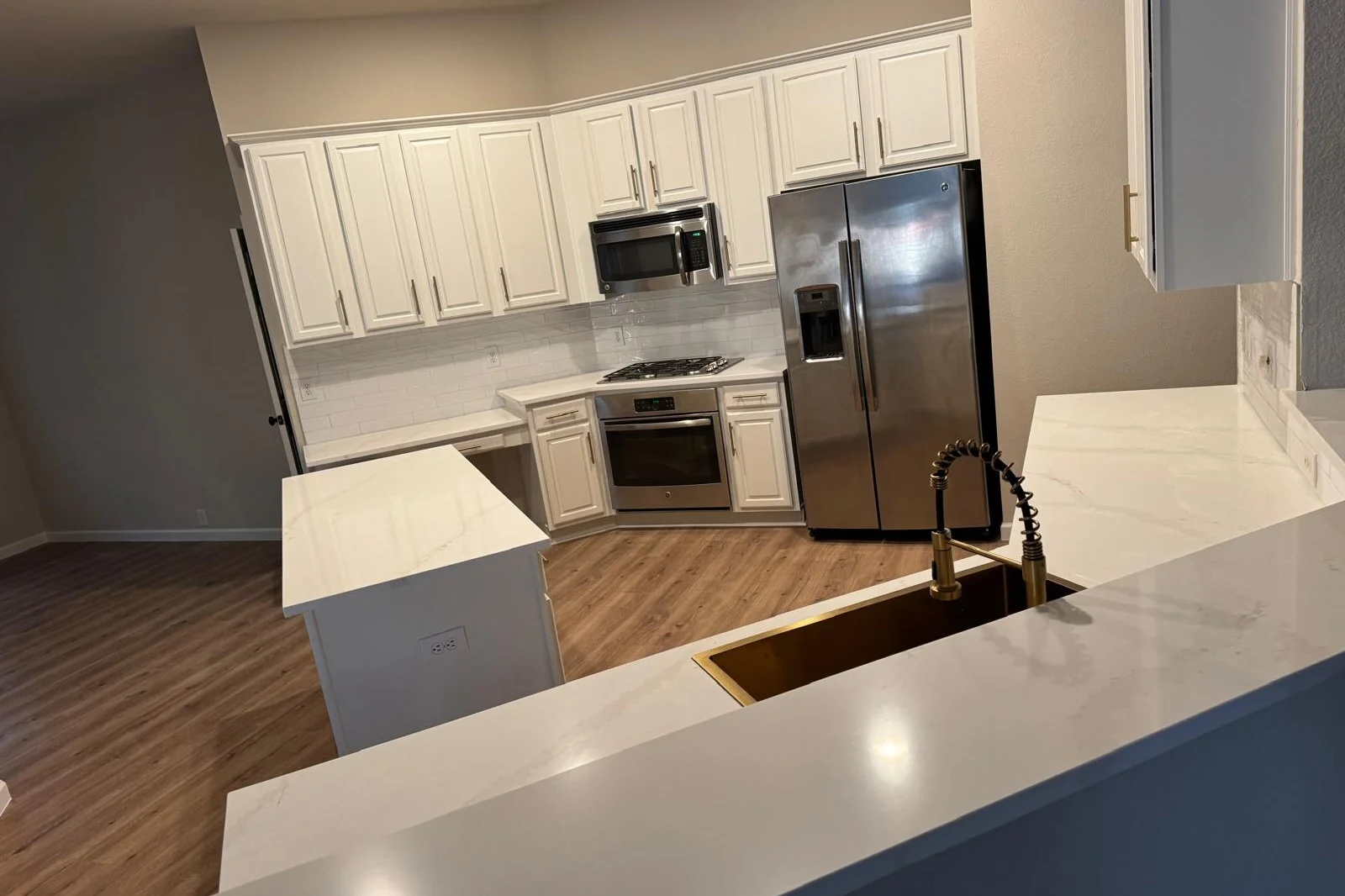
Dry isn't the same as done
People skip the wait, because cabinet paint feels dry in an hour or so. Feeling dry and being hard enough to use are a long way apart, and here's what the makers themselves say:
- Benjamin Moore ADVANCE: dry to the touch in 4 to 6 hours, ready to recoat after 16, kept from heavy use for at least 5 to 7 days, and up to 30 days to reach full hardness.
- Sherwin-Williams, for the inside of cabinets: at least 24 hours before the dishes go back, and 2 to 3 days is better.
- Rust-Oleum's cabinet kit: hardware back on after 12 hours, normal use after 24, and no cleaners for 7 days.
- General Finishes Milk Paint: 21 days in ideal conditions before full use.
A door that gets rehung too soon can stick to the frame and pull the paint off when it opens, which the trade calls blocking. So before a painting job starts, ask for three dates: when the doors go back on, when you can use the kitchen lightly, and when you can clean it like normal.
How long will painted cabinets last?
The paint makers' sheets and the cabinet industry's standard don't give a number of years. None of the sources behind this post includes a test that puts painted, refaced and new cabinets side by side and counts the years each finish lasts.
You may see a claim that cabinets last up to 50 years. That comes from a 2007 industry study about cabinets as a part of a house, and it says nothing about how long a coat of paint on them lasts. Certified factory cabinets do go through tests for heat and humidity, household chemicals and 25,000 open-and-close cycles on the doors and drawers, but none of those is translated into years in a kitchen either. A painted finish will usually last longest on sound boxes, with the right prep and a full cure, in a kitchen where a steady drip from the sink isn't soaking into it.
When painting is the wrong job
If the layout works and the boxes pass the checks above, painting is often the smallest job that changes the room. Refacing, new doors and fronts on the boxes you already have, makes sense when the boxes are sound but the doors are worn out or the style you want can't be painted onto the doors you've got. You're looking at new cabinets when the boxes themselves are failing or the kitchen doesn't work the way you cook, and no amount of paint changes that.
Working with Awesome Renovations
Awesome Renovations is four people, and I'm one of them, on site. My crew sprays doors inside a plastic tent with a fan running rather than in somebody's hallway, which keeps the spray and the dust contained, and my customers notice how clean the work area is kept. One of them wrote:
"The work area was kept clean, the construction quality is rock-solid, and the final look exceeded our expectations." (Sergio Lopez, 08-06-2026)
That's from my 5-star reviews, and the rooms my crew has finished are here.
Ask me whether I'd paint your cabinets or replace them. I'll tell you which one and why.
Get Started
For kitchens, painting and remodeling in Fort Worth, visit ttscontractors.com/pros/awesome-renovations/
Awesome Renovations 6001 E. Lancaster Ave Fort Worth, TX 76112
